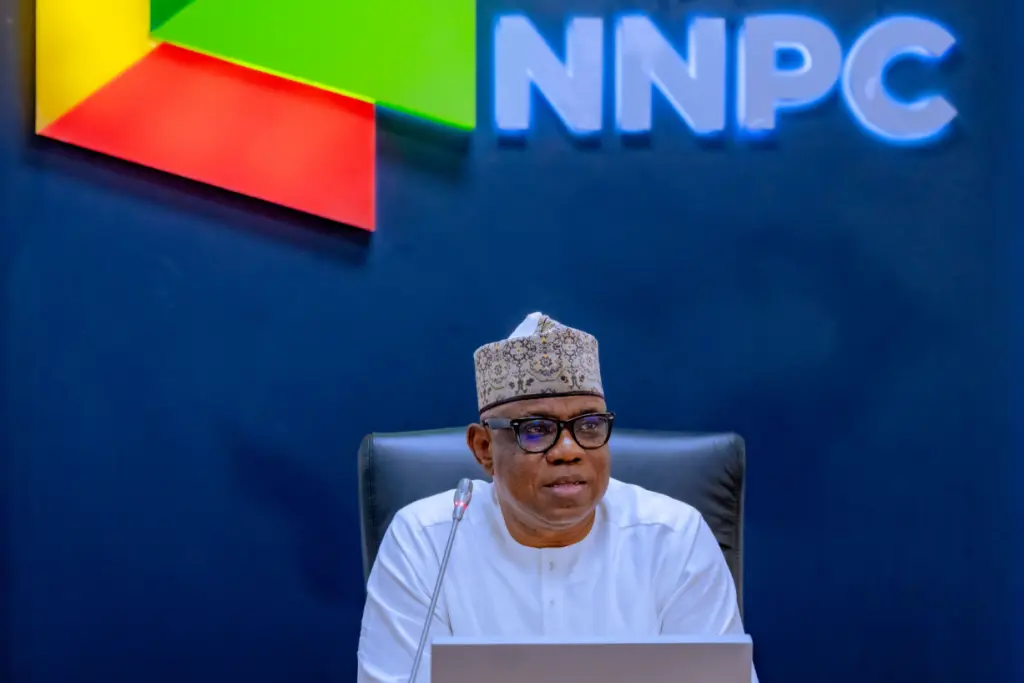
“REFINERY RED FLAG: NNPC BLED NIGERIA BILLIONS, ADMITS BOSS BAYO OJULARI”
GREATRIBUNETVNEWS–NNPC CEO Bayo Ojulari reveals state-owned refineries were a “monumental loss” to Nigeria, prompting shutdown to prevent further damage.
Key Issues:
– _”We were running at a monumental loss to Nigeria. We were just wasting money.”_ – Bayo Ojulari
– 50-55% Utilisation : NNPC pumped crude monthly, but output was low.
– _”We were spending a lot of money on operations, a lot of money on contractors. But when you look at the net, we were just leaking away value.”_
– No Recovery Plan : _”That line of sight to recovery was not clear here.”_
– Poor Product Quality : Port Harcourt produced mid-grade products, a waste of input.
– Political Pressure : _”There were political pressures to keep the refinery product, lots of pressure.”_
– Shutdown Decision : Halted operations for reassessment, prioritizing commerciality.
– Legacy Issues : Decades of underperformance, billions spent on failed rehab contracts.
Ojulari revealed that NNPC was consistently pumping crude cargoes into the refineries each month, yet utilisation levels hovered around 50-55 per cent, resulting in significant value leakage.
“We were spending a lot of money on operations, a lot of money on contractors. But when you look at the net, we were just leaking away value,” Ojulari said.
More troubling, he noted, was the absence of any credible plan to turn the losses around.
“Sometimes you make a loss during investment, but you have a line of sight to recovery. That line of sight was not clear here,” he added.
As a result, Ojulari said the first major decision of his administration was to halt refinery operations to prevent further losses and allow for a rapid reassessment.
“We decided to stop the refinery and do a quick check. We planned that if things were lined up, we would reopen and work on them,” he said.
He disclosed that part of the value destruction stemmed from the quality of products being produced, citing the Port Harcourt Refinery as an example.
“The crude we were taking into Port Harcourt was producing mid-grade products. When you aggregate their value compared to what you put in, it was a waste,” he said.
Ojulari acknowledged that the decision to halt operations was politically sensitive, noting that NNPC had historically been pressured to keep refineries running to ensure fuel supply continuity.
“There were political pressures to keep the refinery product, lots of pressure. But when you have been trained for over 35 years to focus on commerciality and profitability, you can’t sleep with that,” he said.
Nigeria’s four state-owned refineries, Port Harcourt (two plants), Warri, and Kaduna, have for decades operated far below capacity despite repeated turnaround maintenance exercises costing billions of dollars.
At various points, the plants have operated at single-digit capacity or been shut down entirely, forcing Africa’s largest oil producer to rely almost entirely on fuel imports.
Between 2015 and 2023 alone, successive administrations approved multiple rehabilitation contracts, yet domestic refining output remained negligible, intensifying public scrutiny of NNPC’s operational efficiency.
The remarks underscore a broader shift within NNPC, under the Petroleum Industry Act, toward commercial discipline, even in politically sensitive areas such as domestic refining.
About the Author