“US PROPOSES DEEPER SECURITY PARTNERSHIP WITH NIGERIA TO TACKLE VIOLENCE AND EXTREMISM “
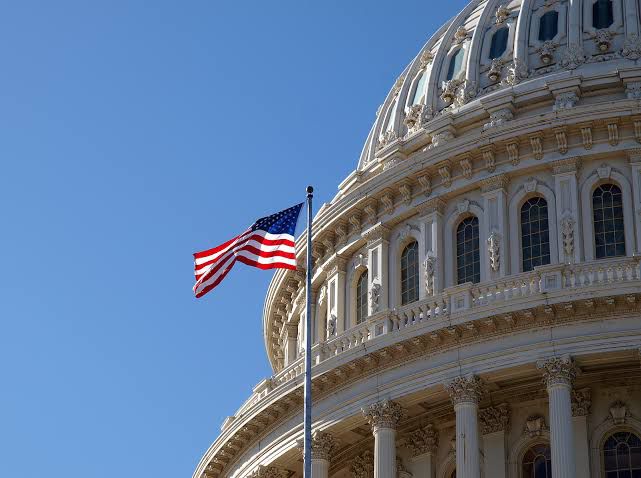
The US Congress is pushing for a bilateral agreement with Nigeria to enhance security cooperation, counter extremism, and promote stability.
Key Issues:
– _”once-in-a-generation opportunity”_ to strengthen US-Nigeria relations.
– Security Cooperation : Tackle violence, dismantle extremist networks, and promote stability.
– _”dismantling extremist networks and strengthening security cooperation”_
– Strategic Partnership : Counter shared threats and promote economic growth.
– _”countering the influence of malign actors in Nigeria”_
– Mutual Interests : Enhance cooperation on security, economy, and development.
The proposed partnership aims to address Nigeria’s security challenges and promote stability, without targeting any specific group.
In a statement entitled “Ending the Persecution of Christians in Nigeria,” lawmakers commended US President Donald Trump for redesignating Nigeria as a Country of Particular Concern (CPC), describing the move as a significant step towards holding perpetrators of violence accountable.
Nigeria was first placed on the CPC list in 2020 under Trump but was later removed by the administration of Joe Biden. US lawmakers have again pushed for measures including visa bans and asset freezes against individuals and groups accused of religious freedom violations.
Among those mentioned in congressional recommendations were former Kano State governor Rabiu Kwankwaso, the Miyetti Allah Cattle Breeders Association of Nigeria and Miyetti Allah Kautal Hore.
● Investigation and findings
According to the statement, Trump tasked Moore, House Appropriations Chairman Tom Cole and other lawmakers with investigating claims of persecution and violence against Christian communities.
Appropriations Vice Chair Mario Diaz-Balart led an investigative roundtable and a congressional delegation to Nigeria, while House Foreign Affairs Committee Chairman Brian Mast and Africa Subcommittee Chairman Chris Smith convened hearings involving government officials and civil society groups.
Lawmakers said the process produced policy recommendations aimed at strengthening security, improving humanitarian response and deepening cooperation between both countries.
The committees alleged that Christians in Nigeria face persistent attacks from armed groups and criticised the use of blasphemy laws in some northern states, arguing they can be used to restrict dissent and target minorities. While acknowledging Nigeria as a key partner, they urged stronger political commitment and increased domestic funding to address violence.
Central to the recommendations is a proposed security and economic pact that would focus on protecting vulnerable communities, eliminating extremist activity, expanding economic cooperation and countering geopolitical rivals in the region.
Under the proposal, Nigeria would co-fund humanitarian assistance — particularly for internally displaced persons in the Middle Belt — support early-warning systems to prevent attacks, deploy adequate security forces and remove armed groups from seized farmlands to enable displaced residents to return home.
Lawmakers also called for expanded defence cooperation, including a shift away from Russian military equipment toward US defence systems through sales and financing arrangements. They proposed technical assistance programmes such as demobilisation, disarmament and reintegration initiatives to reduce illicit weapons and support community security.
Additional recommendations include support for livestock and ranching reforms, land policy changes, improved recruitment and training within Nigeria’s security agencies and broader counter-terrorism collaboration targeting foreign extremist organisations operating in the region.
Congress also advocated measures to address what it described as foreign exploitation of illegal mining operations and their links to armed groups, alongside increased oversight of US aid to Nigeria.
Other proposals include sanctions and visa restrictions against perpetrators of religious violence, calls to review Sharia criminal codes and blasphemy laws, a Government Accountability Office audit of US assistance, and deeper engagement with international partners such as France, Hungary and the United Kingdom.
Lawmakers said the recommendations present a “once-in-a-generation opportunity” to redefine US–Nigeria relations following the country’s redesignation as a CPC and to strengthen cooperation on security, economic development and regional stability.
About the Author