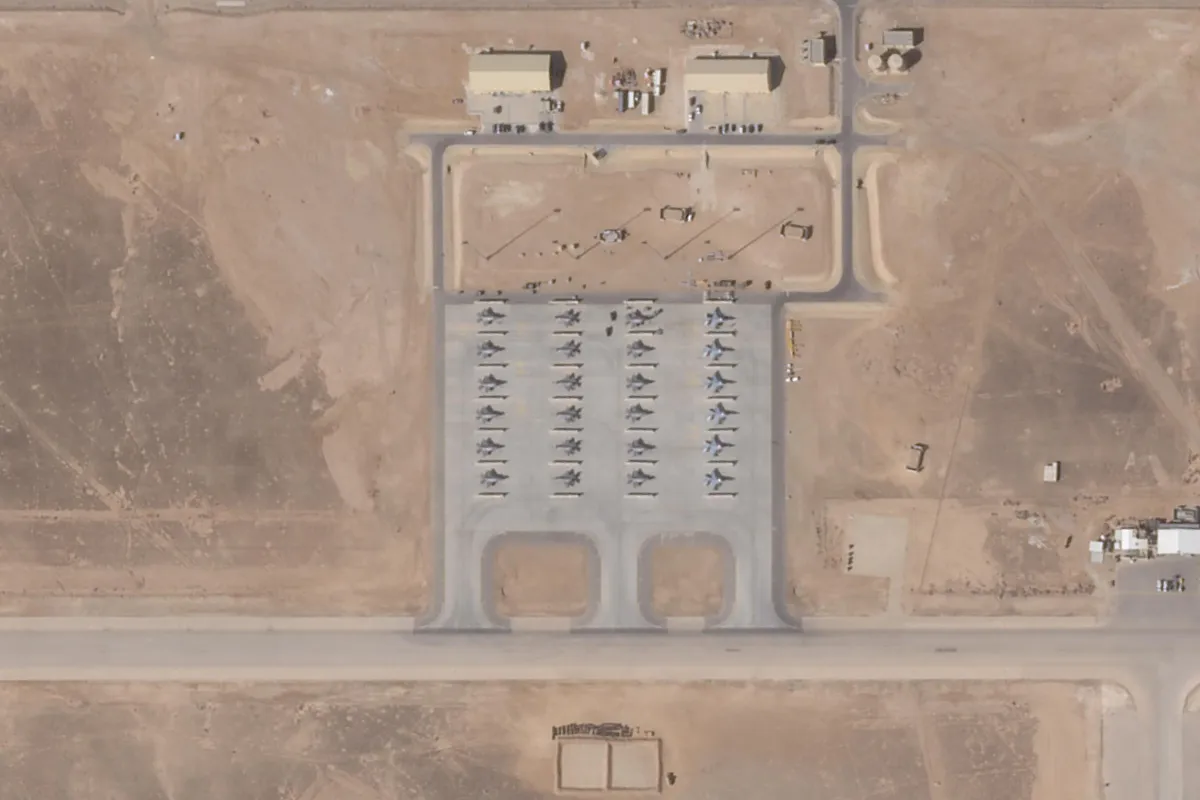
IRAN DELIVERS MASSIVE BLOW TO US MISSILE DEFENSE
GREATRIBUNETVNEWS —IRAN has destroyed a crucial $300 million AN/TPY-2 radar system at Muwaffaq Salti Air Base in Jordan, crippling the US Terminal High Altitude Area Defense (THAAD) missile defense capabilities in the Gulf .
Key Issues:
– _”If successful, an Iranian strike on a THAAD radar would mark one of Iran’s most successful attacks so far.”_ – Ryan Brobst, Foundation for Defense of Democracies
– Radar Destruction: The AN/TPY-2 radar, part of the THAAD system, was destroyed in the opening days of the war, reducing US missile defense capabilities.
– _”These are scarce strategic resources and its loss is a huge blow.”_ – Tom Karako, Center for Strategic and International Studies
– Impact on Defense: The loss shifts interception duties to Patriot systems, which have limited PAC-3 missile stocks.
– US THAAD Systems: The US has eight THAAD systems globally, with each battery costing $1 billion and the radar comprising $300 million.
A THAAD battery consists of 90 soldiers, six truck mounted launchers and forty-eight interceptors — 8 per launcher — one TPY-2 radar, as well as a tactical fire control and communication unit. Each interceptor missile, manufactured by Lockheed Martin Corp., costs about $13 million.
“If you want integrated air and missile defenses, this is just one of the things you’d put in the theater,” said William Alberque, a Europe-based senior fellow at the Pacific Forum research institute.
Earlier in the war, an AN/FPS-132 radar in Qatar — a fixed installation unlike the mobile THAAD system — was damaged during an Iranian attack, according to research from the James Martin Center for Nonproliferation Studies in Monterey, California.
That system is an early warning radar, designed to spot threats at extreme distances but without the precision needed to launch weapons at them.
Air and missile defense systems in the Gulf region have been stressed and, at times, overwhelmed by Iranian retaliatory attacks of drones and ballistic missiles. It has prompted fears that stockpiles of advanced interceptors such as THAAD and PAC-3 will soon run dangerously low.
On Friday, defense contractors including Lockheed and RTX met at the White House as the Pentagon pushes to speed weapons production.
About the Author