
TINUBU @ 3: HOW REA’S MINI-GRIDS ARE POWERING NIGERIA’S $1TN ECONOMY DREAM BY MATHEW IBIYEMI
Key Issues:
1. Electricity Deficit Holding Back Economic Independence
_”For decades, achieving economic independence in Nigeria has been limited by a fundamental deficit: access to reliable electricity.”
2. Mini-Grids Closing the ‘Last Mile’ Energy Gap
_”In rural and peri-urban communities, often referred to as the ‘last mile,’ small businesses, agro-processors, and households have historically survived on costly, polluting petrol generators or lived in complete darkness. However, a silent revolution has been taking place across the country. Led by the Rural Electrification Agency (REA), decentralized renewable energy solutions are systematically closing the energy gap.”
3. Mini-Grids Positioned as Backbone for $1tn Economy Target
_”Driven by bold policy shifts and unprecedented private sector funding, the REA’s mini-grid solutions are not just illuminating homes, they are serving as a critical infrastructure backbone to catalyze the Central Bank of Nigeria’s (CBN) ambitious target of achieving a $1 trillion economy.”
4. Transformation Tied to Tinubu’s Strategic Vision at 3 Years
_”As President Bola Ahmed Tinubu marks his third year in office, this milestone stands as a testament to his administration’s foresight. By recognizing early on that the fragile national grid could not single-handedly carry the weight of Nigeria’s industrial ambitions, the President prioritized decentralized energy solutions to intentionally ease the burden on the national grid.”
5. REA Leadership Credited for Speed and Competence
_”Of notable mention is Mr President’s appointment of Dr. Abba Aliyu as the Managing Director of the REA. Abba’s appointment has injected a much-needed dose of technocratic competence, corporate governance and execution speed into the agency, effectively turning a bottleneck into a launchpad for national growth.”
THE FULL TEXT BY MATHEW IBIYEMI
TINUBU @ 3: HOW REA’s MINI-GRID SOLUTIONS ARE DRIVING NIGERIA’S ’s $1tn ECONOMY TARGET BY MATHEW IBIYEMI
BY MATHEW IBIYEMI
GREATRIBUNETVNEWS–FOR decades, achieving economic independence in Nigeria has been limited by a fundamental deficit: access to reliable electricity.
In rural and peri-urban communities, often referred to as the “last mile,” small businesses, agro-processors, and households have historically survived on costly, polluting petrol generators or lived in complete darkness. However, a silent revolution has been taking place across the country. Led by the Rural Electrification Agency (REA), decentralized renewable energy solutions are systematically closing the energy gap. Driven by bold policy shifts and unprecedented private sector funding, the REA’s mini-grid solutions are not just illuminating homes, they are serving as a critical infrastructure backbone to catalyze the Central Bank of Nigeria’s (CBN) ambitious target of achieving a $1 trillion economy.
This rapid transformation underscores the strategic vision of the current administration. As President Bola Ahmed Tinubu marks his third year in office, this milestone stands as a testament to his administration’s foresight. By recognizing early on that the fragile national grid could not single-handedly carry the weight of Nigeria’s industrial ambitions, the President prioritized decentralized energy solutions to intentionally ease the burden on the national grid.
Of notable mention is Mr President’s appointment of Dr. Abba Aliyu as the Managing Director of the REA. Abba’s appointment has injected a much-needed dose of technocratic competence, corporate governance and execution speed into the agency, effectively turning a bottleneck into a launchpad for national growth.
Historically, the mention of the REA in Nigeria’s public discourse was frequently tied to headlines of systemic corruption, contract inflation, and abandoned projects. For years, the agency operated as a black box where public and international donor funds vanished into ghost electrification schemes, leaving rural communities in perpetual darkness.
Today, transparency has become the order of the day. At the heart of this institutional transformation is the deployment of advanced digital data platforms including the REA Project Monitoring and Performance Hub (MPH), the Nigeria SE4ALL web platform, and specialized tracking architectures managed alongside data partners like Odyssey. By utilizing real-time IoT (Internet of Things) remote monitoring and data portals, the REA tracks precisely how much power is generated and which communities are connected. This data-first architecture ensures full accountability to international donors, eliminates ghost projects, and guarantees that disbursements are strictly tied to verified performance.
Under the leadership of Dr. Abba Aliyu, Nigeria’s off-grid sector has undergone a massive structural shift, moving from a heavy reliance on imported technology to becoming a regional manufacturing powerhouse. Driven by deliberate government policies aimed at de-risking private capital, Nigeria’s installed local solar panel production capacity has skyrocketed from 120 megawatts (MW) to approximately 300MW.
With an additional 3.7 gigawatts (GW) of capacity currently in the development pipeline, Nigeria is fast positioning itself to anchor West Africa as a renewable energy manufacturing hub. Locally manufactured solar panels are already being exported from industrial corridors like Lagos to regional neighbors like Accra, Ghana.
This domestic manufacturing surge is underpinned by a groundbreaking regulatory environment. The Nigerian Electricity Regulatory Commission’s (NERC) Mini-Grid Regulations have expanded the allowable capacity for interconnected mini-grids to 10MW. By defining exactly how mini-grids interact with the main national grid, Nigeria has established one of the most progressive and investor-friendly regulatory frameworks in Africa, one that is currently being studied and replicated by countries like Mozambique, Benin Republic, Burkina Faso, and Niger.
At the center of REA’s current aggressive rollout is the Distributed Access through Renewable Energy Scale-Up (DARES) programme, widely recognized as the largest publicly funded renewable energy access initiative globally.
DARES is an ambitious $750 million initiative structured to pull an additional $1.1 billion in private sector investments through a results-based financing model. Under this mechanism, private developers must fully mobilize and deploy their own capital to build functioning energy infrastructure before unlocking financial incentives.
The impacts of the DARES initiative are aggresively mapped toward radical socio-economic transformation, aiming to provide clean, reliable electricity to over 17.5 million Nigerians, power over 2.5 million households across the federation, and launch 1,350 mini-grids, including 250 interconnected systems.
As at today, over 1000 mini grids are being developed across the country. Additionally, 48 Interconnected mini-grids are being deployed that will inject additional 288MW of clean reliable capacity in collaboration with 11 Distribution Companies.
The REA has gone further to unlock private finance through partnerships with institutions like FCMB, Lotus Bank, and the International Finance Corporation (IFC), creating an expansive, decentralized energy ecosystem capable of sustaining itself long after public funds are exhausted.
The expansion of last-mile electrification directly intersects with macroeconomic objectives. The CBN’s blueprint for a $1 trillion economy relies heavily on boosting productivity in agriculture, expanding MSMEs (Micro, Small, and Medium Enterprises), and scaling up local manufacturing. The REA’s mini-grid solutions act as an economic multiplier for this vision in three distinct ways.
Firstly, it unlocks the agricultural value chain.
A significant portion of Nigeria’s wealth resides in its rural agrarian communities, which suffer from high post-harvest losses due to a lack of cold storage and processing facilities. By deploying solar mini-grids to agricultural hubs, the REA enables the operation of solar-powered mills, irrigation pumps, and cold storage units. This transitions subsistence farming into a commercialized, high-yield industry, drastically boosting rural GDP contribution.
Secondly, it reduces MSMEs operating costs.
High inflation and currency fluctuations heavily penalize businesses reliant on imported fuel for generators. Replacing petrol and diesel with predictable, cheaper solar energy immediately frees up operational capital for millions of small businesses such as salons, tailoring shops, welding centers, and healthcare facilities. These saved costs are directly reinvested into expanding operations and hiring more local labor.
Furthermore, the scale-up of mini-grid capacities to 10MW allows for the strategic deployment of large solar farms in border towns. This positions Nigeria to engage in cross-border electricity trade, selling off-grid power to neighboring West African border communities. This opens up entirely new foreign exchange revenue streams, strengthening the Naira and boosting regional trade volumes in line with sub-regional economic integration goals.
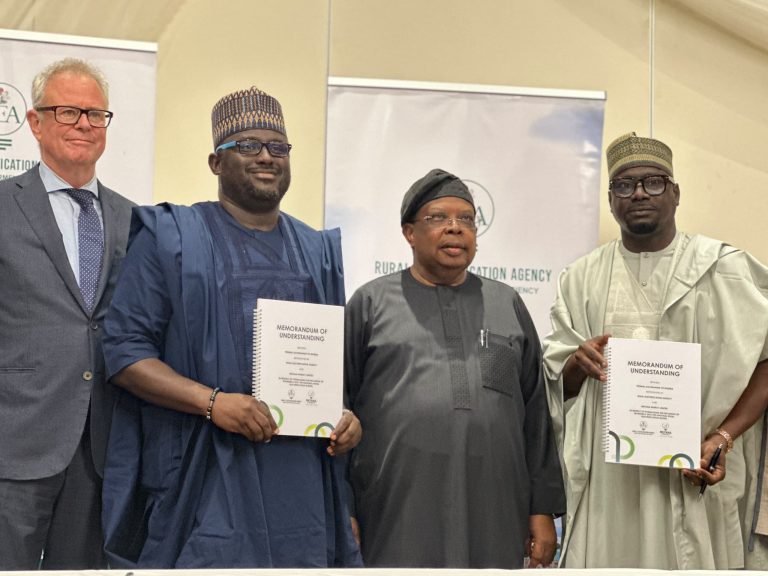
In addition, the REA signed a $700,000 Memorandum of Understanding (MoU) with the Economic Community of West African States (ECOWAS) Commission to electrify healthcare centers and 15 public universities across the Federal Capital Territory (FCT), Niger, and Nasarawa states. This initiative has already begun yielding tangible results, with active projects rolling out across institutions like the Federal University of Technology, Akure (FUTA).
The Rural Electrification Agency’s mini-grid solutions have evolved beyond basic social welfare into a primary driver of industrialization and economic formalization. By taking electricity to the last mile, the REA is activating trapped economic potential in regions that the traditional grid could not reach.
Mathew is an energy journalist and a personal media aide to the Managing Director of Rural Electrification Agency (REA)
About the Author