MWALIMU: THE LEGACY OF JULIUS NYERERE, AFRICA’S MIGHTY TEACHER BY TGI
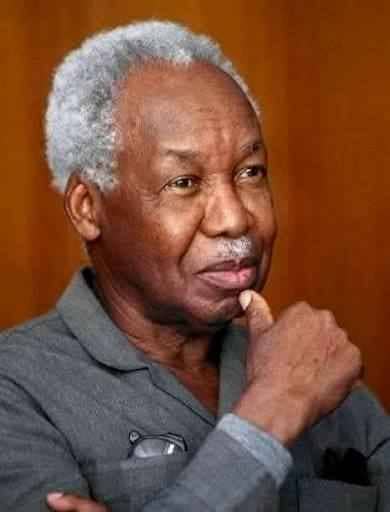
GREATRIBUNETVNEWS–JULIUS Nyerere, born on April 13, 1922, was a Tanzanian politician, anti-colonial activist, and political theorist who led his country to independence and shaped its future.
Key Highlights:
– _”African languages are vessels capacious enough to carry the full weight of human thought.”_ – Nyerere’s translation of Shakespearean plays into Kiswahili showcased his belief in African linguistic and cultural richness.
– Arusha Declaration (1967): Nyerere’s vision for Ujamaa, or African socialism, emphasized communal solidarity, self-reliance, and state power serving the people.
– _”It is the responsibility of the government to see that these resources are used for the benefit of the people and not for the benefit of a few individuals who happened to gain power.”_ – Arusha Declaration.
– Pan-Africanism: Tanzania under Nyerere supported liberation movements in southern Africa, including the ANC, ZANU, FRELIMO, and SWAPO.
– Defending Sovereignty: Nyerere’s counter-offensive against Idi Amin’s Uganda in 1978 demonstrated his commitment to national sovereignty.
Nyerere’s leadership and ideology continue to inspire, with his emphasis on dignity, self-reliance, and pan-African unity leaving a lasting impact on Tanzania and Africa.
THE FULL TEXT BY TGI
THE LIFE AND TIME OF THE MWALIMU BY TGI
BY TGI
GREATRIBUNETVNEWS–BORN on April 13, 1922, in Butiama, on the eastern shore of Lake Victoria, Julius Nyerere was the son of a Zanaki chief — a man of modest lineage who would go on to become the moral architect of a nation and the intellectual conscience of an entire continent. Educated at Makerere University and the University of Edinburgh, Nyerere returned home not as a servant of empire but as its most principled adversary. He translated both Shakespearean plays — Julius Caesar and The Merchant of Venice — into Kiswahili, an act that was itself a political statement: *that African languages are vessels capacious enough to carry the full weight of human thought.
In 1961, through disciplined agitation and without a single shot fired, Nyerere led Tanganyika to independence. Two years later, his statesmanship produced one of the most extraordinary political acts of the century — the voluntary union of Tanganyika and Zanzibar into the United Republic of Tanzania. He governed not with the swagger of acquisition but with the gravity of stewardship.
> It is the responsibility of the government to see that these resources are used for the benefit of the people and not for the benefit of a few individuals who happened to gain power — Julius Kambarage Nyerere, Arusha Declaration, 1967
The 1967 Arusha Declaration remains the most honest and ideologically coherent governing document that any postcolonial African state has ever produced. It committed Tanzania to Ujamaa — African socialism rooted in communal solidarity, self-reliance, and the absolute subordination of state power to the welfare of the ordinary citizen. Nyerere was unambiguous: a true leader must live as the people live. He banned his own ministers from holding shares in private companies or owning rental properties. He himself left office in 1985 owning nothing more than a small farm. He was not merely theorising dignity. He was practising it.
His pan-Africanist credentials were equally unimpeachable. Tanzania under Nyerere was a sanctuary and a launching pad for liberation movements across southern Africa — the African National Congress (ANC), the Zimbabwe African National Union (ZANU), FRELIMO of Mozambique, and SWAPO of Namibia all found refuge in Dar es Salaam. He spent Tanzanian resources the country could barely spare on liberation, because he understood, with a clarity that shames the timidity of today’s African leadership, that no nation on this continent is truly free until every nation is free.
And when, in 1978, Idi Amin’s Uganda invaded Tanzanian territory, Nyerere did not flinch. He launched a counter-offensive that drove Amin from power — not to seize Ugandan land, not to install a client regime, but to defend national sovereignty. He then withdrew. It is among the most disciplined uses of military power in African history, and it stands in piercing contrast to the cynical interventions that masquerade as solidarity on this continent today.
Nyerere was also a man of extraordinary intellectual honesty. When the Ujamaa villagisation programme fell short of its economic ambitions, he said so openly. He did not manage perception. He assessed reality. That rare quality — the willingness to hold ideology accountable to evidence — is among the most important inheritances he has left us.
He died on October 14, 1999, in London, receiving treatment for leukaemia. He died poor. He died at peace. He died honoured by his people in a way that no amount of looted foreign reserves can purchase. Tanzania called him Baba wa Taifa — Father of the Nation. The continent should call him something more demanding: the standard by which all who seek to govern Africa must be measured.
The Shifting Global Order — And What Nyerere Demands of African Leaders Now
The world in which Africa’s current leaders operate has not become more benign since Nyerere’s time. It has become more complex, more multipolar, and — in the name of that multipolarity — more treacherous. The unipolar certainties of the post-Cold War moment have dissolved. The United States retreats, lurches, and reasserts itself unpredictably. China offers infrastructure with one hand and debt-dependency with the other. The EU lectures Africa on democracy while providing full diplomatic cover for its own member states’ neo-colonial extraction networks. Russia projects military influence across the Sahel while contributing precisely nothing to the structural transformation of African economies. In this theatre of competing imperial appetites, the weakest performers are invariably African heads of state who mistake the applause of foreign capitals for the approval of their own people.
TGF submits that Nyerere’s life and thought furnish the most reliable map through this labyrinth. We offer the following lessons not as nostalgia, but as a living programme.
Five Nyererian Imperatives for Africa’s Present Leadership
I. Self-Reliance Is Not Poverty — Dependency Is
Nyerere was unequivocal: aid that comes with conditionalities is not generosity, it is governance-by-proxy. Africa’s leaders must urgently reckon with the fact that every IMF structural adjustment, every conditioned loan from any power — Eastern or Western — that subordinates domestic fiscal policy to foreign approval is a surrender of sovereignty. The TGF calls on African governments to pursue domestic resource mobilisation, tax justice, and intra-African trade with the seriousness of a national security imperative, because that is precisely what it is.
II. Non-Alignment Is Not Neutrality — It Is Strategic Intelligence
Nyerere did not refuse to take sides between justice and injustice. What he refused was to allow Africa to be conscripted into the wars of others. In an era where African states are being pressured to align with NATO, to endorse or condemn Beijing, to choose Washington over Moscow, the Nyererian counsel is clear:
> Africa’s only permanent interest is the welfare of African people.
The pursuit of that interest must drive every diplomatic calculation. Opportunistic alignment with any bloc — dressed up as geopolitical pragmatism — is merely neo-colonialism with a voluntary signature at the bottom.
III. African Unity Is the Only Viable Sovereignty
Nyerere spent the last years of his life campaigning for a political union of East Africa, because he understood what Nkrumah understood before him: that the nation-state boundaries bequeathed by colonialism are strategically indefensible for single countries but collectively surmountable. The African Continental Free Trade Area (AfCFTA) is a beginning, but it is only a beginning. Africa’s leaders must move from trade integration to political integration with urgency.
> A continent of 1.4 billion people with 54 separate armies, 54 separate currencies, and 54 separate begging bowls at the doors of foreign institutions is not a power. It is a market being sold to the highest bidder.
IV. The Moral Credibility of Leaders Is a National Asset
Nyerere chose to be poor. He was the most powerful argument that the state makes for itself when it asks citizens to sacrifice. No austerity programme imposed on a people by leaders and pretenders who owns eight properties on three continents and stashed stolen wealth in tax havens, carries moral weight. No anti-corruption campaign launched by a government whose ministers are themselves the most accomplished looters in the polity commands popular trust. In an era of democratic recession across Africa, the antidote to authoritarian temptation is not procedural democracy — it is demonstrable integrity. Nyerere demonstrated it. That remains its own rebuke.
V. Ideology Must Be Honest Enough to Learn
Nyerere admitted the failures of villagisation without abandoning his commitment to people-centred governance. Africa’s leaders must cultivate the same rigour: to hold their ideological commitments firmly in one hand and empirical feedback firmly in the other, and to have the courage to revise policy without revising principle. The present crises of food insecurity, climate vulnerability, youth unemployment, and democratic erosion across Africa are not problems that will yield to sloganeering. They demand the kind of serious, evidence-driven, welfare-centred governance that Nyerere practised at its finest — and honestly interrogated at its most difficult.
About the Author